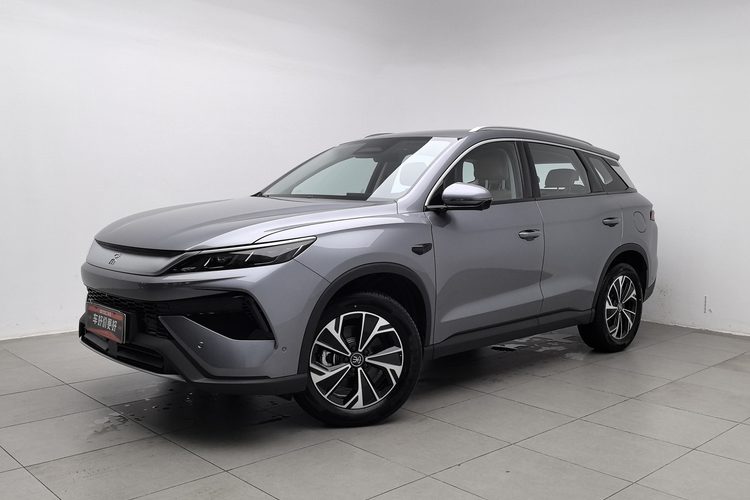
Basic Information

BrandBYD
SeriesSong Pro
Year2020
First Registration2020/05
Mileage70,700km
Transfer Count1times
FuelGasoline
TransmissionDCT
Engine1.5T 160 L4
ColorWhite
Seats5seats

Condition Description

Vehicle condition meets standards; inspection passed; vehicle condition meets standards; 0 claims; 1 ownership transfer.

This vehicle is 6 years old, with an average annual mileage of 11,800 kilometers. It has been used infrequently and has been transferred to another owner once. There may be obvious signs of wear and tear on the exterior. The interior shows obvious signs of use or dirt. The overall body frame is intact and without any abnormalities. The powertrain is functioning normally.

Configuration Highlights

✓Adaptive Cruise Control
✓Adaptive Headlights
✓Surround View Camera
✓Lane Departure Warning
✓Digital Instrument Cluster
✓Panoramic Sunroof
✓High Beam Assist
✓Front Radar
✓Auto Hold
✓Keyless Entry
✓High-definition Low Beam
✓Power Folding Mirrors
✓Auto Headlights
✓Keyless Start
✓Rear Air Vents
✓Tire Pressure Monitoring
✓Heated Mirrors
✓Hill Start Assist
✓Rear Parking Sensors
✓Anti-pinch Windows

Q&A

More

What electronic signature system is used for the international used car sales contract? Is it legally valid?

We use an internationally certified electronic signature platform (such as DocuSign or Adobe Sign). Each signed contract generates a digital certificate with a timestamp and encrypted hash value, which has full legal defense effectiveness in international arbitration courts.

Beyond the car price, what costs should I budget when importing a used car from China?

A realistic budget has several layers beyond the vehicle price. First, inland logistics in China: moving the car to the export port typically costs $300-$800. Second, export handling: inspection, customs declaration and paperwork usually add $500-$1,000. Third, ocean freight. A 20ft container to most destinations runs $1,200-$3,000 depending on route; RoRo shipping can be cheaper for driveable cars. Add marine insurance, usually 0.3%-0.5% of the car value. Fourth, destination charges: port handling, customs duties, VAT/GST and local registration fees. These vary widely; some countries charge duties of 20%-80% of the vehicle value plus an excise based on engine capacity. Finally, any compliance work: inspection certificates, modifications to meet local standards, or homologation. Ask your exporter for a full CIF quote and have a local customs broker confirm destination taxes before you commit.

Can I get spare parts for a Chinese-brand car in my country, and how do I order them from China?

Parts availability depends on the brand's official presence in your market, but even unsupported brands can be maintained through direct ordering. Check three channels first: the brand's official dealer network (if any), third-party importers who specialize in Chinese auto parts, and generic equivalents. For wear items like brake pads, filters, and wipers, aftermarket suppliers usually stock cross-references by VIN. For model-specific parts — headlights, sensors, control modules — order directly from China. Ask your exporter for the parts catalog by VIN, confirm OEM part numbers, and compare prices. A turbocharger that costs $900 from a local dealer often ships from China for $350 plus $80 freight. Practical tips: bundle multiple parts into one shipment to amortize freight; ask for DDP (delivered duty paid) pricing so customs clearance is handled; and always verify part numbers against your VIN before paying, as Chinese models have running changes mid-year. Keep a small stock of common wear parts — oil filters, air filters, spark plugs — to avoid a 4-6 week wait for routine maintenance.

BYD Song Pro 1.5T 160 L4

比亚迪 宋Pro 2019款 1.5T 自动豪华型

EXW: $7,712
Car CodeSWA1619618
Publish Date