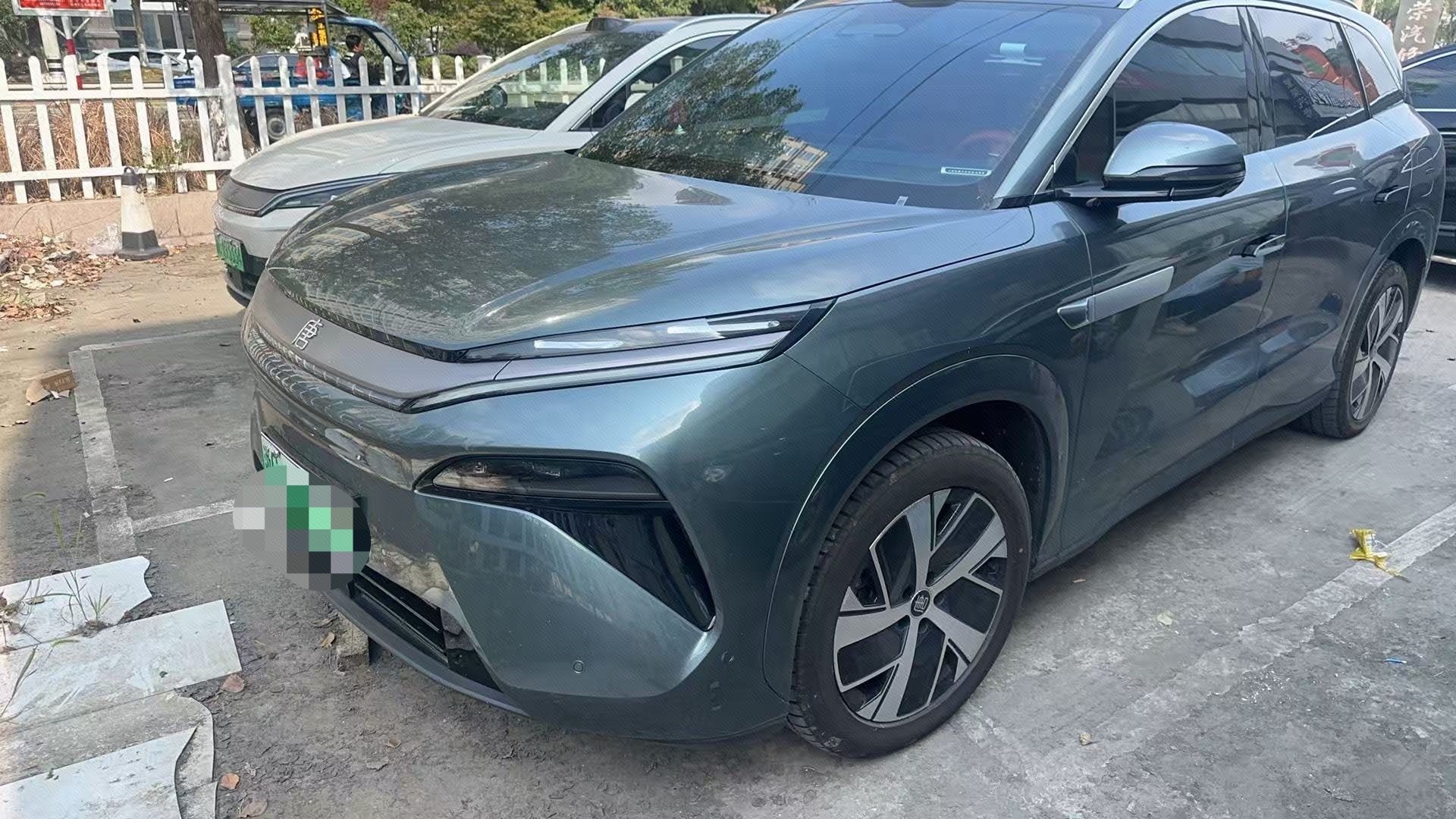
Basic Information

BrandBYD
SeriesTang L
Year2025
First Registration2025/04
Mileage0.35km
Transfer Count1times
FuelPHEV
TransmissionE-CVT
Engine1.5T 156 L4
ColorGreen
Seats7seats

Condition Description

The test was normal. For detailed maintenance records, please refer to data provided by a third-party platform (for reference only, not as the final basis).

Configuration Highlights

✓Driver/Passenger Airbags
✓Front/Rear Side Airbags
✓Front/Rear Curtain Airbags
✓Keyless Start System
✓Keyless Entry System
✓Hill Start Assist
✓Auto Hold
✓Hill Descent Control
✓Adaptive Suspension
✓Panoramic Sunroof
✓Power Trunk
✓Roof Rack
✓Multifunction Steering Wheel
✓Front Parking Sensors
✓Head-Up Display
✓Seat Material
✓Driver/Passenger Power Seats
✓Rear Cupholders
✓GPS Navigation
✓Low Beam Headlights
✓Daytime Running Lights
✓Auto Headlights
✓Adjustable Headlight Height
✓Power Windows
✓Anti-pinch Windows
✓Climate Control Type
✓Rear Independent Climate Control
✓Rear Air Vents
✓Blind Spot Assist
✓Lane Departure Warning
✓Active Safety System
✓Split-screen Display

Q&A

More

How are import duties on used cars from China calculated, and which HS code applies?

Used cars are classified under HS heading 8703 (motor vehicles for transport of persons), with the last four digits determined by engine type and size. Gasoline cars usually fall in 8703.21–8703.80 depending on displacement; pure EVs fall under 8703.80; hybrids have their own subheadings. The duty amount depends on your country's tariff schedule: 1. Most countries charge duty on the CIF value (car price + freight + insurance), not the FOB price. 2. Many developing markets levy higher duties on used vehicles than new ones, and some add a surcharge based on age — older cars can cost significantly more to clear. 3. After duty, you typically pay VAT/GST on the CIF + duty total, plus port and customs fees. Practical tips: ask your exporter to state the exact HS code on the commercial invoice and confirm it with a local customs broker before shipping. A wrong code can trigger reclassification, penalties, or delays. Also budget for any excise tax tied to engine capacity — in several markets a 2.5L car clears far cheaper than a 3.5L one.

What should I check during a live video test drive of a used car in China, and which sounds or behaviors are red flags?

Request a live video call during the test drive rather than a pre-recorded one. Cold start first: listen for rattling or metal scraping in the first seconds — possible timing chain or hydraulic lifter issues. During acceleration, a whining from the gearbox area can mean bearing wear; hesitation or jerking in an automatic suggests transmission problems. Braking: the pedal should feel firm, not spongy, and the car must not pull to one side. Turn the wheel fully in both directions and listen for clicking — a classic CV joint fault. Insist on a highway segment too: vibrations above 100 km/h often point to unbalanced wheels or bent rims. Ask the driver to film the dashboard throughout — warning lights that flicker on briefly are still faults that OBD will record.

If our country has a Free Trade Agreement (FTA) with China, can you provide a specific certificate of origin?

Yes. We will apply to customs or the trade promotion agency for a specific version of the certificate of origin (such as ASEAN Form E, China-ASEAN FTA certificate, etc.) to assist you in legally enjoying significant or even zero tariff treatment at the destination port.

BYD Tang L 1.5T 156 L4

比亚迪 唐L 2025款 DM 175KM无人机玩家版

EXW: $32,394
Car CodeSWA1587043
Publish Date2026/01/13