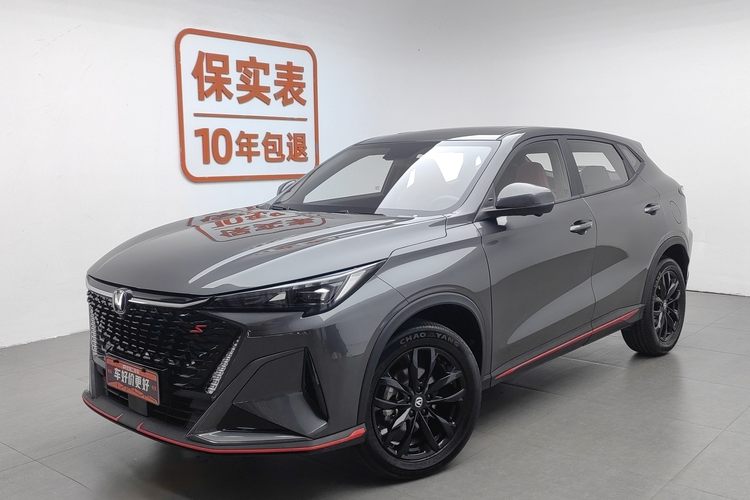
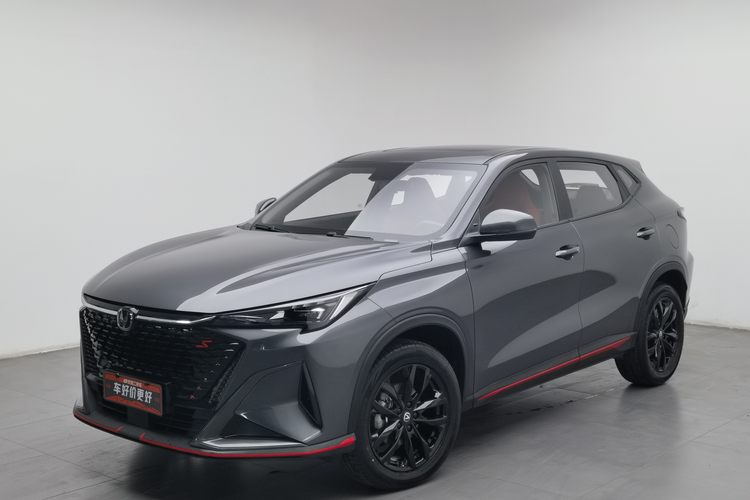
Basic Information

BrandChangan
SeriesX5 PLUS
Year2024
First Registration2024/08
Mileage7,500km
Transfer Count-
FuelGasoline
TransmissionDCT
Engine1.5T 188 L4
ColorGrey
Seats5seats

Condition Description

Excellent

Exterior: Paintwork is well-maintained; body structure shows no signs of repair; no major accidents. Interior: Clean and tidy. Safety indicator lights are normal; airbags and other passive safety features are functioning correctly; vehicle electronics are in good working order; static and dynamic equipment is complete. Driving: Ignition, starting, acceleration, cornering, deceleration, and braking are all smooth; acceleration is rapid, power output is smooth and comfortable, and there is no idling vibration. Overall: Overall vehicle condition is average. The body frame structure shows no deformation or twisting, and there are no signs of fire or water damage. There are signs of repainting, but the overall paintwork is good, ruling out major accidents. Wide field of vision, suitable for beginners; spacious, bright, and well-ventilated interior, suitable for family commuting.

Near-new car
0 transfers

Configuration Highlights

✓Lane Departure Warning
✓ISOFIX Child Seat Anchors
✓Auto Hold
✓Auto Park Assist
✓Power Trunk
✓Keyless Start System
✓Digital Instrument Cluster
✓Built-in Dashcam
✓Bluetooth/Hands-free
✓Connected Car
✓OTA Updates
✓PM2.5 Air Filter
✓Rear Air Vents

Accident & Maintenance Records

Accident Record

🔗 Open Link

Maintenance Record

🔗 Open Link

Document Information

Inspection Expiry Date2026/08
Warranty Expiry Date-
Insurance Expiry Date2026/08

Q&A

More

How are the refrigerant pressure, compressor operation, and heating effect of the air conditioning system deeply tested?

The technician will start the vehicle and turn on the air conditioning system, measuring the actual temperature at the vents at the lowest and highest settings with a thermometer; at the same time, they will connect a manifold pressure gauge to check if the refrigerant pressure in the high and low pressure lines is within the normal range, determining if there is a chronic refrigerant leak.
How do I evaluate interior wear on a used car from China to estimate real mileage and usage intensity?

Interior wear is harder to fake than an odometer and often reveals true usage better than any document. Focus on high-contact points the seller rarely restores. The driver's seat bolster shows creasing and cracking by 80,000-100,000 km even with covers. Steering wheel leather polishes smooth and darkens with hand oils; a shiny wheel with low claimed mileage is a red flag. Pedal rubbers wear through at similar rates — check accelerator, brake, and clutch depth. Second-row wear patterns tell you how the car was used: heavy child-seat indentations suggest family use (usually gentler), while uniform rear wear with clean front suggests commercial or ride-hailing duty. Check seat rails for rust (indicates water ingress) and look under floor mats for moisture staining or musty smell — flood cars often hide it there. Also examine the infotainment and instrument cluster: Chinese EVs log usage data internally, and a dealer diagnostic readout can cross-check driving hours against mileage. Request close-up, well-lit photos of these specific points during your live video inspection rather than relying on the seller's gallery.

How to use technology to verify that a vehicle's emissions standards comply with our country's import regulations.

Our technical report will read the environmental information from the vehicle's factory-issued documentation (including certifications like National V, National VI, etc.). You need to submit the specific emission limit data we provide (such as grams of CO, THC, NOx emissions) to your country's environmental or customs authorities for compliance comparison.