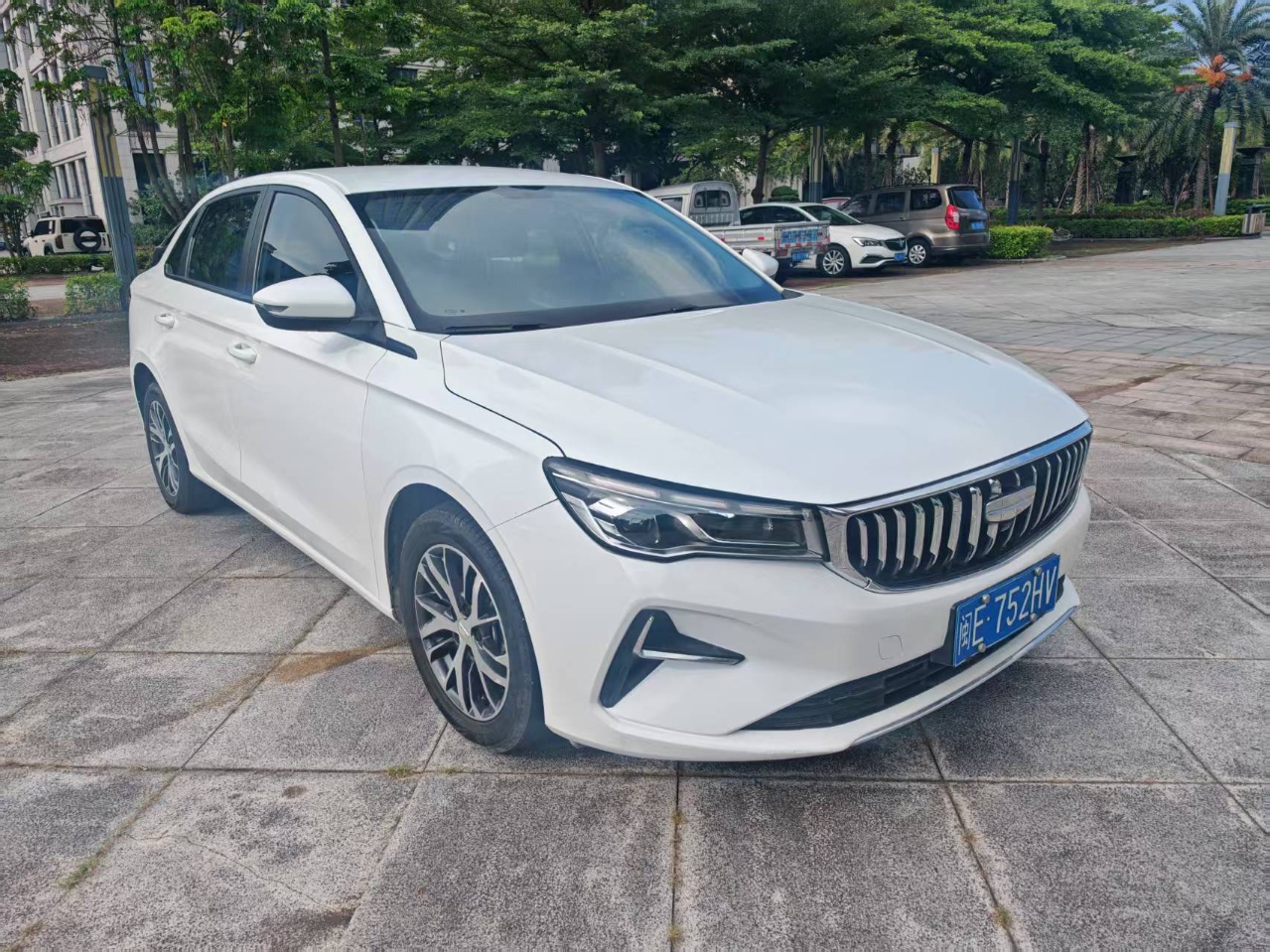


Basic Information

BrandGEELY
SeriesEmgrand
Year2017
First Registration2017/09
Mileage52,900km
Transfer Count-
FuelGasoline
TransmissionManual
Engine1.5L 109 L4
ColorWhite
Seats-

Condition Description

The body has localized damage or repair marks in some areas. Structural components and reinforcement parts show no accident-related damage or repairs. Vehicle performance (including the three-electric system) has degraded or is limited.

Accident inspection: main structure damaged, reinforcement parts undamaged, exterior panels damaged, hinges normal. Engine bay inspection: key mechanical components in engine bay normal. Exterior: none. Interior: center console dirty, most features normal, airbag system normal, lighting system normal. Startup inspection: sunroof stuck. Onboard tools: none.

电话直连
可讲价
平台物流
可转售
零过户
新检测标准升级>
非泡水

Document Information

Inspection Expiry Date2027/09
Warranty Expiry Date-
Insurance Expiry Date2027/09

Q&A

More

Will you conduct a thorough inspection of the engine and transmission of the used car?

We will never perform blind deep disassembly unless there are clear severe fault codes or extreme noises. The sealing of the engine and transmission is crucial, and compromising the factory seals to investigate non-existent issues is unprofessional. We rely on data flow and external acoustic and fluid analysis to make judgments.


Is China's "National VI B" emission standard equivalent to Europe's Euro VI standard?

From a technical perspective, China's "National VI B (China VI-b)" is one of the strictest emission standards globally, with limits on carbon monoxide, nitrogen oxides, and particulate matter that are even stricter than some of Europe's Euro VI standards. However, the two are not legally recognized by each other, depending on your country's import regulations.

If the record of a vehicle's first maintenance is missing from the system, how do you determine its early wear condition?

Many car owners do not have their first maintenance done at authorized dealerships, leading to gaps in early data. In such cases, we do not blindly trust the odometer; instead, we analyze the tire production dates and wear levels, as well as the depth of grooves on the brake disc edges, using the "gold standard" of physical wear to infer the intensity of early use.