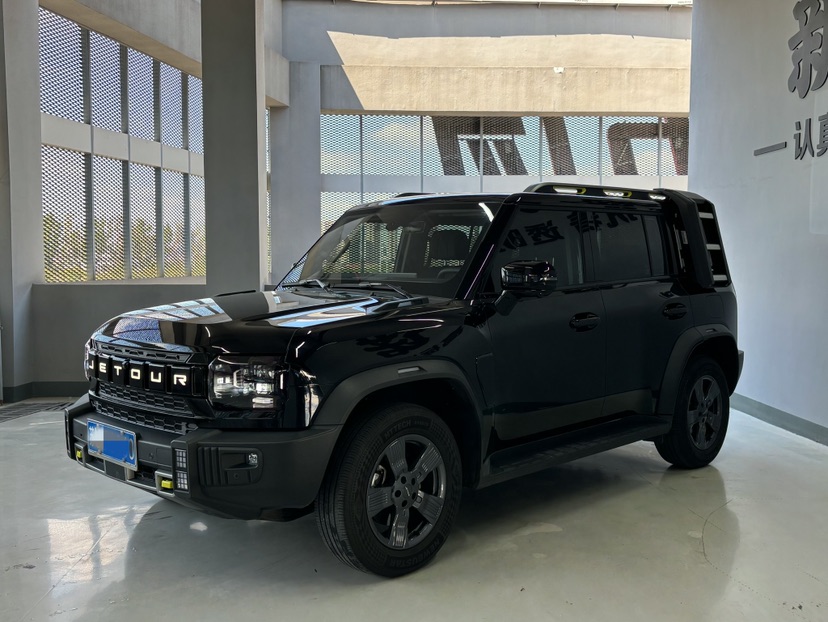
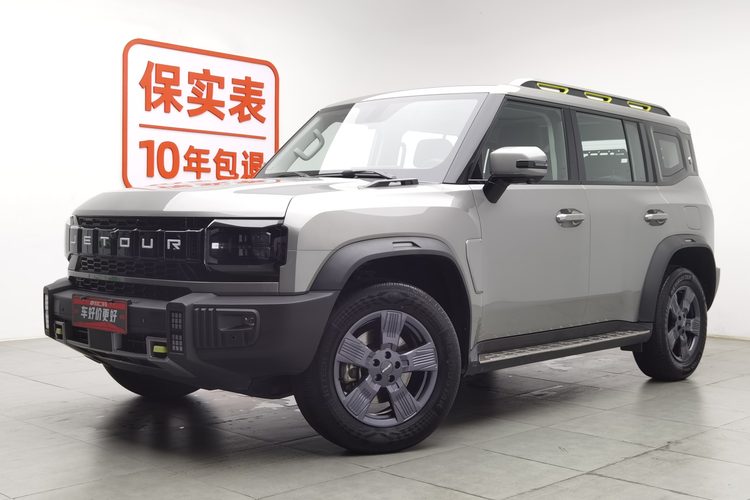
Basic Information

BrandJetour
SeriesTraveller
Year2025
First Registration2025/10
Mileage2,800km
Transfer Count-
FuelGasoline
TransmissionDCT
Engine1.5T 184 L4
ColorBlack
Seats-

Condition Description

Vehicle performance is good. Structural, reinforcing, and outer panels have no accident-related damage or repairs. High-voltage battery, drive motor, and electronic control systems have no damage.

Accident inspection: main structure, reinforcing parts, and outer panels undamaged; hinges normal. Engine bay: key mechanical components normal. Exterior: no issues. Interior: most features normal; airbags, seatbelts, dashboard, gauges, and lighting system normal. Startup check: main components normal. Tool kit: none.

电话直连
可讲价
平台物流
可转售
抵押车
零过户
新检测标准升级>
非泡水

Document Information

Inspection Expiry Date2027/10
Warranty Expiry Date-
Insurance Expiry Date2026/10

Q&A

More

Will the Advanced Driver Assistance Systems (ADAS) work under overseas road conditions?

Basic perception functions (like Adaptive Cruise Control ACC, Lane Keeping Assist LKA, and Automatic Emergency Braking AEB) rely on the vehicle's local radar and cameras, and can operate normally overseas. However, advanced features that heavily depend on high-precision maps and cloud data (like Navigation on Autopilot NOA and Full Self-Driving FSD) cannot be activated overseas.


What tools and equipment does a professional pre-shipment inspection of a used car use?

A proper inspection relies on equipment, not just eyes. The inspector should use a paint thickness gauge to measure 50-60 points across body panels; original paint is typically 80-150 microns. An OBD diagnostic scanner reads stored and pending fault codes across all control units, and for EVs it also reads battery state of health and charge cycle counts. The car must go on a lift for the underbody check: frame rails, suspension components, oil leaks and accident repair marks are only visible from below. A battery tester checks starting voltage and charging system health, and a tread depth gauge documents tire condition. Ask for the report to include raw readings and dated photos rather than a simple pass/fail summary - that is what makes it verifiable.

When shipping by RoRo vessel, is the "Terminal Handling Charge (THC)" at the destination port prepaid by your freight forwarder or paid by the buyer upon arrival?

Under international practices and our standard CIF/FOB terms, the THC at the port of origin (China) is borne by the seller; all THC and port miscellaneous charges incurred at the destination port during unloading are to be paid by the buyer (consignee) upon local customs clearance and pickup.