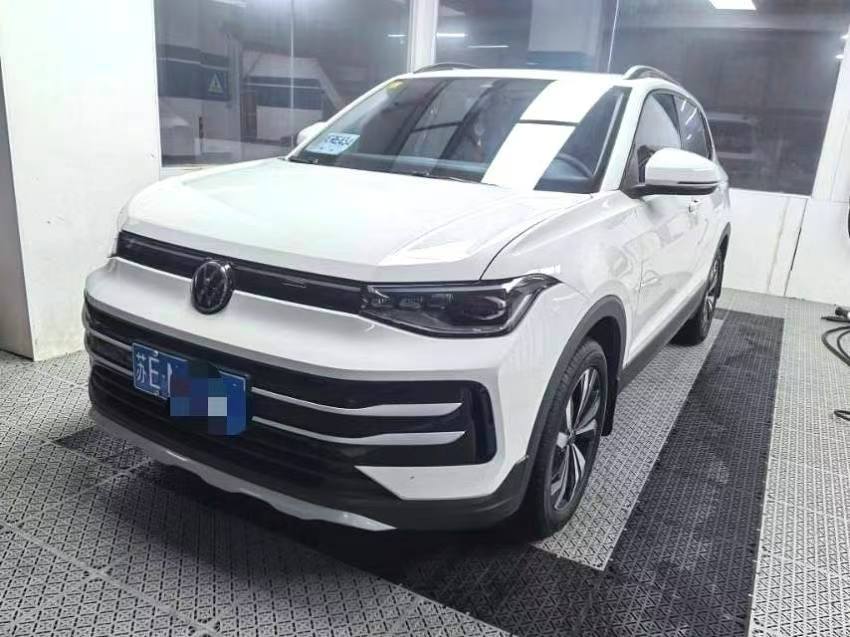
Basic Information

BrandVolkswagen
SeriesTharu
Year2024
First Registration2024/10
Mileage1,900km
Transfer Count1times
FuelGasoline
TransmissionDCT
Engine1.5T 160 L4
ColorWhite
Seats5seats

Condition Description

Vehicle performance is good. Structural, reinforced, and cover panels have no accident-related damage or repairs. The three-electric system (battery, motor, electronic control) has no damage.

Accident inspection: main structure no damage, reinforced parts no damage, cover panels no damage, hinges normal. Engine bay inspection: key mechanical components normal. Exterior: none. Interior: most features normal, airbag inspection normal, seatbelts normal, dashboard normal, instrument check normal, lighting system normal. Startup check: OBD shows other fault codes. Onboard tools: none.

电话直连
可讲价
平台物流
车主降价
公户车
抵押车
新检测标准升级>
非泡水

Document Information

Inspection Expiry Date2026/10
Warranty Expiry Date-
Insurance Expiry Date-

Q&A

More

Is the vehicle's catalytic converter in good condition? Will it be maliciously removed before export?

The catalytic converter contains precious metals, making it a target for theft. During chassis inspection, we check if the welding points of the catalytic converter are in their original state. Once verified, the vehicle will be sealed after being handed over to port logistics to prevent disassembly and resale.

If the vehicle's nameplate is worn and unclear, can it be legally re-stamped for customs clearance?

We cannot privately forge or re-stamp the original vehicle nameplate (this is illegal). If the nameplate is unclear, we will rely on the clear VIN on the windshield and the engine stamp as supplementary proof, and we will warn you of this risk before shipping.

When shipping by RoRo vessel, is the "Terminal Handling Charge (THC)" at the destination port prepaid by your freight forwarder or paid by the buyer upon arrival?

Under international practices and our standard CIF/FOB terms, the THC at the port of origin (China) is borne by the seller; all THC and port miscellaneous charges incurred at the destination port during unloading are to be paid by the buyer (consignee) upon local customs clearance and pickup.