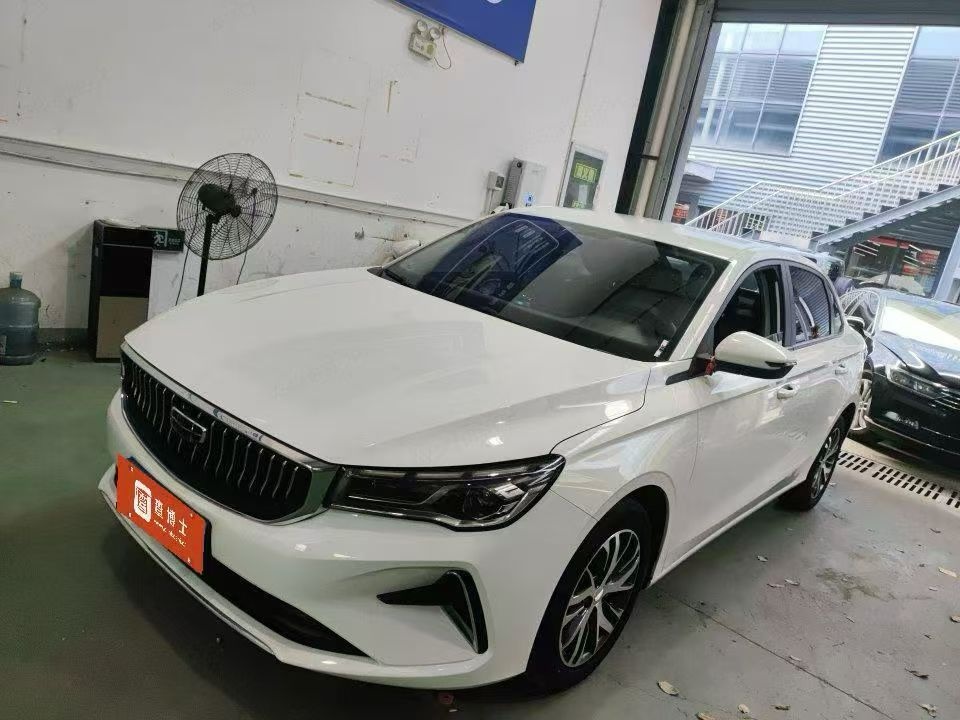


Basic Information

BrandGEELY
SeriesEmgrand
Year2017
First Registration2017/12
Mileage85,800km
Transfer Count-
FuelGasoline
TransmissionManual
Engine1.5L 109 L4
ColorWhite
Seats-

Condition Description

Localized body damage or repair marks present. Structural and reinforcement components show no accident-related damage or repairs. Vehicle performance (including three-electric system) has degraded or is performance-limited.

Accident inspection: main structure undamaged, reinforcement components damaged, cover panels damaged, hinges normal. Engine bay inspection: key mechanical components in engine compartment normal. Exterior: 1 replacement, 4 panel repairs, 2 paint jobs. Interior: most features normal, airbag inspection normal, seatbelts normal, dashboard normal, instrument inspection normal, lighting system normal. Startup inspection: main components normal. Onboard tools: none.

电话直连
可讲价
平台物流
可转售
车主降价
零过户
非泡水

Document Information

Inspection Expiry Date2027/12
Warranty Expiry Date-
Insurance Expiry Date2027/01

Q&A

More

What should I do if I find obvious defects on the exterior that were not mentioned in the inspection report after receiving the car?

Please take timestamped photos and videos at the first opportunity when picking up the car at the destination port (before leaving the port area). We will compare these with the final archived images taken at the Chinese port before shipping. If it is confirmed that we missed reporting it during the pre-shipment inspection, we will provide compensation for parts or labor costs based on the severity of the defect; if it is new physical damage incurred during shipping, the insurance claim process will need to be initiated.

If a car frequently transfers between extremely cold areas (like Northeast China) and extremely hot areas (like Hainan), would you provide special risk warnings?

Absolutely. The extreme temperature fluctuations will significantly accelerate the aging of chassis rubber parts, oil seals, and interior plastics. For vehicles frequently dispatched across such latitudes, we will conduct fatigue resistance checks on chassis rubber parts that are twice as stringent as those for vehicles in temperate regions.

How do you detect carbon buildup and wear inside the engine using technology without deep disassembly?

We use two steps: 1. Insert a medical-grade endoscope through the spark plug hole to visually inspect cylinder wall scratches and carbon buildup on the piston top; 2. Extract an engine oil sample to check for large metal debris or emulsification (caused by coolant leakage).